By Manuel Lazo
MAR 13
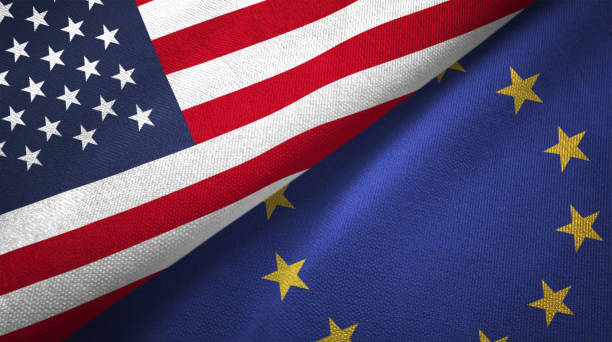
On February 28, 2025, global political attention shifted to Washington, D.C., as Donald Trump—the newly inaugurated 47th president of the United States—Vice President J.D. Vance, and other members of Trump’s cabinet welcomed Ukrainian President Volodymyr Zelensky to the White House for a televised meeting in the Oval Office. Held a mere four days after the third anniversary of Russia’s devastating invasion of Ukraine, the international community largely remained optimistic that the meeting would be constructive and provide a pathway to normalcy for a country that had suffered repeated violations of its sovereignty and right to self-determination at the hands of Vladimir Putin and his so-called “special military operation.” This couldn’t have been farther from the truth. Zelensky was berated throughout the meeting, and both sides walked away from the negotiation table without a clear roadmap to peace in sight. Internationally, the behavior of Trump and Vance was scrutinized, and both were accused of appeasing Russian interests at the expense of Ukraine. The reactions were particularly intense in Europe, due in large part to the threat Russian imperialism poses to the continent’s stability and—in some countries’ cases—even their very existence. The European reaction wasn’t just about Ukraine, however, or even Russia. Indeed, the Trump-Zelensky meeting rekindled fears of what a new age of American isolationism might mean for a continent that has long relied on the United States for security, economic well-being, and international collaboration. Changes to the European-American relationship due to the Trump administration’s “America First” foreign policy doctrine could have global repercussions and greatly influence the power struggles that may come to define the foreseeable geopolitical future.
European-American relations have arguably formed the backbone of the Pax Americana—an era of relative peace around the world since 1945. The European theater of World War II formally concluded with Germany’s unconditional surrender to the Allies on May 8, 1945. From the rubble of war emerged the United States and the Soviet Union as the world’s foremost superpowers, supplanting traditional pre-war European powers like France and Great Britain in the process. The groundwork for a strong transatlantic relationship was first laid by Franklin Roosevelt, who advocated for policies supporting the war effort in mostly Western European countries. The Lend-Lease Act of 1941 authorized over $50 billion in American foreign aid during the war to support more than 30 Allied nations, most of which were European. The largest recipient of Lend-Lease aid was the United Kingdom, which received over $14 billion worth of military assistance—equivalent to around $228 billion when adjusted for inflation. Later that year, Roosevelt met with Prime Minister Winston Churchill to discuss their shared vision for a postwar future. These ideals formed the basis of the Atlantic Charter, whose main points included self-determination, global demilitarization, and increased economic and social cooperation among nations. Originally a bilateral memorandum between the United States and the United Kingdom, the Charter was later endorsed by 26 Allied nations and emphasized the crucial role the United States would play in shaping the postwar geopolitical landscape. European-American relations were further strengthened by mutual support for an international organization modeled on the League of Nations—one that would mediate international affairs, promote sustainable global development, and prevent future large-scale hostilities. Transatlantic cooperation on this matter was a prominent theme during the Tehran (1943), Dumbarton Oaks (1944), and Yalta (1945) conferences among Allied nations. These proposals ultimately materialized into the United Nations, an organization built upon the shared values and beliefs of the United States and Western European countries.
President Harry Truman and his administration sought to build on the foundations laid by his predecessor, and it was during these years that the U.S.-Europe relationship began to resemble its modern-day counterpart. Crises in Europe and the emergence of communism as an impediment to American interests pushed Truman to issue the Truman Doctrine—a set of principles advocating for an active American foreign policy aimed at containing communist and Soviet influence—in a 1947 address to a joint session of Congress. This set the stage for an assertive American presence in European affairs, as the continent became a critical region during the Cold War. In an effort to expand the United States’ sphere of influence in Europe, Truman authorized the creation of the Marshall Plan, a program that provided $14 billion in financial assistance to 16 European nations to support their postwar recoveries. The Marshall Plan successfully revitalized several European economies and forged strong economic partnerships between the U.S. and many Western European nations. These economic ties were further reinforced by the Bretton Woods system. Originally formulated by Roosevelt in 1944, the Bretton Woods system established an international monetary framework in which the U.S. dollar was fixed to the price of gold, and 44 other countries—most of them in Western Europe—pegged their currencies to the U.S. dollar. The specific characteristics of the system were detailed in the Bretton Woods Agreement, signed in Bretton Woods, New Hampshire. The direct convertibility between European currencies and the U.S. dollar increased trade volumes between the two regions and contributed to postwar financial stability. Economic cooperation soon translated into military cooperation. In 1949, the foreign ministers of 10 Western and Northern European countries met with their American and Canadian counterparts in Washington, D.C., to sign the North Atlantic Treaty, creating the North Atlantic Treaty Organization (NATO). The treaty was a mutual defense pact calling on member states to consider an attack on one member as an attack on all. It was proposed in response to Soviet aggression in Czechoslovakia (the 1948 coup) and Berlin (the Berlin Airlift). The formation of NATO was a major milestone in both the Cold War and European-American relations. Over the following years, the organization admitted new members, and military ties among member states significantly deepened, with the United States establishing military installations in countries such as Germany, Italy, Spain, the United Kingdom, and other NATO allies. By the end of Truman’s administration, most of Western Europe was firmly within the United States’ sphere of influence, both economically and militarily. Relations throughout the rest of the Cold War would be defined by the expansion of NATO, the policy of Soviet containment, and efforts to establish a common European economic market. A prototype of the latter was formed in 1951 with the signing of the Treaty of Paris by Belgium, the Netherlands, Luxembourg, France, Italy, and West Germany, creating the European Coal and Steel Community (ECSC)—an organization that enabled the free movement of coal and steel among member states. The ECSC would eventually evolve into the European Union, adding a new dimension to the special relationship between the United States and Europe.
Post–Cold War relations between Europe and the United States have remained consistently strong and reliable, largely defined by U.S. cooperation with the European Union and its role within NATO. During this time, the relationship evolved from one primarily centered on anti-communism to a more comprehensive partnership focused on counterterrorism, regional peace and stability, economic cooperation, and democratization. NATO undertook its first major military operations in the 1990s during the Yugoslav Wars, establishing a multinational coalition to address violent escalations in the region. This included the deployment of NATO peacekeepers in Bosnia, enforcement of a UN-authorized no-fly zone, and bombing campaigns in both Bosnia (1995) and the Federal Republic of Yugoslavia (1999). Both operations were deemed at least partially successful and reinforced the shared commitment of the United States and other NATO member states to countering unlawful military action in Europe. An inflection point for NATO came in 2001 when Article 5 was invoked for the first time. Article 5 is the section of the North Atlantic Treaty that obligates other NATO members to defend a fellow member if it is attacked. It was invoked in response to the September 11 attacks to support the United States and its subsequent invasion of Afghanistan. While the United States initially objected to NATO members’ direct military involvement, several countries eventually supported the U.S. war effort. The United Kingdom and Canada were notable for their extensive military contributions, while all NATO member states assisted in humanitarian operations and efforts to establish a transitional Afghan government as part of the International Security Assistance Force (ISAF).
Meanwhile, relations with the EU were solidified through a number of bilateral agreements and diplomatic commitments, such as the 1998 Transatlantic Economic Partnership, which outlined mutual intentions to reduce trade barriers and promote investment. From 1990 onward, the U.S. and EU engaged in regular political dialogue, and periodic summits have been held ever since. Further progress was made at the 2007 EU–U.S. summit, where both parties adopted the Transatlantic Economic Council framework to promote deeper economic integration. Shared values and mutual membership in international bodies like the G7, IMF, and—most prominently—NATO have made the U.S.–European transatlantic relationship one of the strongest in global geopolitics. This is not to say that there haven’t been disagreements or points of contention. The U.S. invasion of Iraq and a perceived reluctance by Washington to commit to sustainability targets have at times caused rifts with long-standing European allies. Conversely, the United States has expressed concern over Europe’s trade relations with China and has publicly disagreed with EU positions on capital punishment, among other issues. In spite of these differences, the multidecade transatlantic experiment—dating back to World War II—has resulted in an active, resolute, influential, and multifaceted partnership with few parallels in contemporary international relations.
As the world braces for the next four years of American foreign policy under the current administration, the possibility of a European-American split has become increasingly likely. The Trump-Zelensky meeting aside, statements from White House officials and cabinet members suggest an American withdrawal from cooperation with Europe. In February, two weeks before the Trump-Zelensky meeting, Vice President J.D. Vance delivered remarks at the Munich Security Conference that drew the ire of EU and NATO nations. In his speech, Vance criticized Europe for perceived infringements on free speech, citing the annulment of the Romanian presidential election results, the UK’s policies against certain anti-abortion protests, and the exclusion of far-right parties from political processes as examples. Vance’s speech signaled a shift in values and political priorities, prompting figures ranging from the German defense minister to European Commission President Ursula von der Leyen to publicly oppose the vice president’s positions. Secretary of State Marco Rubio later doubled down on Vance’s views during an appearance on Face the Nation, indicating that U.S. foreign policy will reflect the vice president’s stance. The political rupture now unfolding represents a nadir in 80 years of the transatlantic relationship, and future developments will likely redefine America’s and Europe’s roles in global affairs. Nearly 35 years of largely uncontested American political hegemony are now under threat on a scale not seen since the Cold War. The rise of organizations such as BRICS and the New Development Bank as alternatives to Western-led institutions like the G7 and IMF has led commentators to describe today’s international landscape as “multipolar,” with countries such as India, Russia, and China emerging as challengers to the American-led global system. It remains unclear what this new international order will mean for the rest of the world, but early signs point to a disregard for the rule of law, greater tolerance for human rights violations, increased international coercion and subservience, and a rejection of multilateral cooperation in favor of realism-based foreign policy grounded in narrow national interests. China appears to be the current heir apparent to America’s superpower status. However, events such as its economic coercion of countries like Sri Lanka and Kiribati in exchange for political favors, maritime disputes with the Philippines, threats to annex the internationally recognized country of Taiwan, and a deeply troubling human rights record suggest that China’s rise has not been a net positive for the international community. The U.S. has responded to China’s growing influence by prioritizing relations in the Pacific, and the Republican Party Platform clearly names “countering China” as a central foreign policy objective. By seeking to isolate itself from European affairs, however, the U.S. risks alienating a crucial ally in its “new Cold War” against China. While European countries have grown frustrated with China’s industrial subsidies and indifference toward Russia’s invasion of Ukraine, many remain hesitant to adopt a tougher stance. Von der Leyen famously stated at the 2023 World Economic Forum that the EU must “de-risk” rather than “de-couple” from China. Additionally, several U.S.-aligned European countries, including the Netherlands and Greece, are participants in China’s Belt and Road Initiative—Beijing’s global infrastructure investment program. American isolationism and protectionism would further diminish the likelihood of European cooperation against China’s geopolitical ambitions, and could dissuade Indo-Pacific allies from doing the same. Given the scale of China’s aspirations, the U.S. will need as much support from its allies as possible to decisively counter the Chinese threat. It cannot afford to lose such a critical ally at this pivotal moment. American capitulation to China would significantly weaken the U.S. economy, jeopardize national security, and likely produce devastating effects for millions around the world.
In addition to geopolitical motivations, the United States and Europe both reap immense rewards from their shared relationship and cooperation. Together, the U.S. and the EU account for nearly $50 trillion in nominal GDP, with the U.S. contributing $27.7 trillion and the EU $20.3 trillion. As such, they maintain arguably the most important and valuable trade relationship in the world. In 2023 alone, the United States and European Union traded $1.7 trillion worth of goods and services—approximately 29% of global trade—with bilateral trade supporting 2.3 million American jobs. EU and U.S. firms have mutual investments exceeding $5.8 trillion, underscoring the importance of transatlantic relations to business and commerce in both regions. Among the most traded goods are cars, medicines, and blood fractions exported from the EU to the U.S., and crude oil, petroleum gases, and medical equipment exported from the U.S. to the EU. EU countries are also among the largest holders of U.S. debt. Three EU nations—Luxembourg ($370.7 billion), Ireland ($331.5 billion), and Belgium ($314.4 billion)—collectively hold over $1 trillion in U.S. Treasury securities. This figure does not include holdings by other EU member states or by non-EU European countries such as the United Kingdom ($679.2 billion) and Switzerland ($287.9 billion), which hold additional hundreds of billions in U.S. debt. Considering the total value of foreign investment in U.S. debt securities is $7.9 trillion, the EU’s role is indispensable. Without this support, the U.S. would struggle to finance its debt and meet immediate liabilities, placing funding for defense, social welfare, and other programs at risk. EU-U.S. relations are also crucial in the realm of humanitarianism, as demonstrated through their roles in the G7. For instance, in 2021, the G7 committed over $1.5 billion in humanitarian assistance to three countries at immediate risk of famine—Yemen, South Sudan, and Nigeria—and an additional $7 billion to support 39 other countries facing humanitarian crises. One of the largest modern humanitarian efforts began in 2000 when the U.S. and EU member states Germany, Italy, France, and the United Kingdom (then still a member) committed to canceling $110 billion in debt held by heavily indebted poor countries (HIPC). More recently, the EU and U.S. have committed substantial resources to address humanitarian needs arising from the Russo-Ukrainian War. Additionally, the transatlantic relationship is influential in the field of research. The EU and U.S. account for nearly half of global research funding, and cooperation between them has led to unprecedented advancements. Both parties signed the Agreement for Science and Technology Cooperation in 1998, which has been renewed every five years since. Under this framework, the U.S. and EU have collaborated in nuclear fission and fusion research, cancer research, and artificial intelligence. In 2019, they implemented a new arrangement allowing U.S. researchers with active NSF (National Science Foundation) awards to collaborate with ERC (European Research Council) grant holders. The EU also operates the Marie Skłodowska-Curie Actions program, which offers fellowships for U.S. researchers to spend up to two years in European institutions. Advancements in critical technological, medical, social, and scientific fields may be jeopardized if this partnership is weakened.
Charles de Gaulle, president of France and one of the most celebrated European figures of the 20th century, is remembered for several important contributions. Yet one of the defining elements of his legacy was his unwillingness to become subservient to foreign powers—including the United States. At a time when Europe and the U.S. were growing closer during the early stages of the Cold War, de Gaulle pushed back, expressing concern over the U.S.’s commitment to upholding shared values. Under his leadership, he forced the U.S. to close its military bases in France, criticized American intervention in Vietnam, and decried the “exorbitant privileges” conferred upon the U.S. dollar. Today, in 2025, de Gaulle’s words have struck a chord with millions of Europeans who feel betrayed by the actions of their once-strongest ally. Make no mistake: Donald Trump’s actions threaten to undo over 80 years of progress and unprecedented human development. International relations can often resemble physics—every action has an equal and opposite reaction—and any attempt to upend the transatlantic relationship will likely be met with serious consequences for both parties. The current administration has demonstrated a blatant disregard for the foreign policy norms, customs, and precedents that have given the United States the global standing it enjoys today, and the international community has reason to be concerned. Throughout history, it is difficult to identify instances where isolationism—especially to the extent modern MAGA Republicans advocate—has led to meaningful global progress. A return to the murky waters of nationalistic isolation would mean abandoning the economic opportunities, global security, and prosperity that the modern world affords. These are trying times for both the United States and Europe—a sentiment shared by other long-time Western allies taken aback by the words and actions of the 47th president. However, if one subscribes to the theory of constant historical progress, there is hope that future developments may recalibrate the potentially harmful policies of the current American administration. Relations may seem strained now, but perhaps in the near future, the sun will rise on the transatlantic partnership once again—and with it, the United States may yet live up to its title as the leader of the free world.
Bibliography
“Truman Doctrine (1947) | National Archives”. National Archives, https://www.archives.gov/milestone-documents/truman-doctrine
“World War II and Security Agreements – Treaties”. American Foreign Relations, https://www.americanforeignrelations.com/O-W/Treaties-World-war-ii-and-security-agreements.html
Marchall A. “Relations Between the United States and Europe from the Second World War to Today”. The Journal, 4 Mar. 2025, https://uisjournal.com/relations-between-the-united-states-and-europe-from-the-second-world-war-to-today/
Chen J. “Bretton Woods Agreement and the Institutions It Created Explained”. Investopedia, 2 July 2024, https://www.investopedia.com/terms/b/brettonwoodsagreement.asp
“Formation of Nato – Purpose, Dates & Cold War | HISTORY”. HISTORY, 14 Apr. 2010, https://www.history.com/topics/cold-war/formation-of-nato-and-warsaw-pact
“Treaty Establishing the European Coal and Steel Community, ECSC Treaty”. EUR-Lex, 11 Dec. 2017, https://eur-lex.europa.eu/legal-content/EN/TXT/?uri=LEGISSUM:xy0022
“The European Union and the United States | EEAS”. Delegation of the European Union to the United States of America, 4 Oct. 2023, https://www.eeas.europa.eu/united-states-america/european-union-and-united-states_en?s=253
“The Transatlantic Economic Partnership”. U.S. Department of State, 18 May 1998, https://1997-2001.state.gov/regions/eur/eu/js_980518_useu_econ.html
“History – U.S. Mission to the European Union”. U.S. Mission to the European Union, https://useu.usmission.gov/history/
“Transatlantic Economic Council – United States Department of State”. U.S. Department of State, https://www.state.gov/bureau-of-european-and-eurasian-affairs/transatlantic-economic-council
Latschan T. “Deep Rift Between US and EU Opens up in Munich – DW – 02/15/2025”. DW, 15 Feb. 2025, https://www.dw.com/en/deep-rift-between-us-and-eu-opens-up-in-munich/a-71624354
Irwin L. “Marco Rubio Spars With Margaret Brennan over JD Vance”. The Hill, 16 Feb. 2025, https://thehill.com/homenews/administration/5148429-rubio-brennan-vance-munich-speech/
Luck F. “JD Vance Claims UK Is ’stagnating Because of Its immigration’ in Scathing Speech”. LBC: Leading Britain’s Conversation, 19 Mar. 2025, https://www.lbc.co.uk/usa/jd-vance-uk-immigration-latest-washington-trump/
Laws J., and Feng J. “Where Are US Military Bases in Europe? – Newsweek”. Newsweek, 18 Feb. 2025, https://www.newsweek.com/us-military-bases-europe-locations-2032281#:~:text=Troops%20are%20in%20more%20than%2038%20U.S.%20military,have%20a%20value%20of%20at%20least%20%2410%20million.
Li X., and Zhangxi C. “What Might a Chinese World Order Look Like? – The Diplomat”. The Diplomat, 13 Apr. 2018, https://thediplomat.com/2018/04/what-might-a-chinese-world-order-look-like/
Piekos W. “Investigating China’s Economic Coercion: The Reach and Role of Chinese Corporate Entities”. Atlantic Council, 6 Nov. 2023, https://www.atlanticcouncil.org/in-depth-research-reports/report/investigating-chinas-economic-coercion/
Abi-Habib M. “How China Got Sri Lanka to Cough Up a Port – The New York Times”. The New York Times, 25 June 2018, https://www.nytimes.com/2018/06/25/world/asia/china-sri-lanka-port.html
Lynch S., Toosi N., Moens B., and Banco E. “The U.S. Wants Europe to Stand up to China. Europe Says: Not so Fast.”. Politico, 8 Mar. 2022, https://www.politico.com/news/2023/03/08/us-europe-china-00086204
Ruta M. “Belt and Road Initiative”. World Bank, 29 Mar. 2018, https://www.worldbank.org/en/topic/regional-integration/brief/belt-and-road-initiative
“EU Trade Relations With the United States”. European Commission, 14 Feb. 2025, https://policy.trade.ec.europa.eu/eu-trade-relationships-country-and-region/countries-and-regions/united-states_en
Labonte M., and Leubsdorf B. “Foreign Holdings of Federal Debt”. Congress.Gov, 18 June 2024, https://www.congress.gov/crs-product/RS22331
“EU and US Together for a More Peaceful, Safer and Fairer World”. European External Action Service, 20 Oct. 2023, https://www.eeas.europa.eu/eeas/eu-and-us-together-more-peaceful-safer-and-fairer-world_en?s=253
“International Cooperation With United States in Research and Innovation”. European Commission, https://research-and-innovation.ec.europa.eu/strategy/strategy-research-and-innovation/europe-world/international-cooperation/bilateral-cooperation-science-and-technology-agreements-non-eu-countries/united-states_en
 Publius News
Leave a comment